

hai, H., Davis, C. G., Mahboob, W., Perry, S., Adams, A., & Goldfield, G. S. (2024). Reducing social media use improves appearance and weight esteem in youth with emotional distress. Psychology of Popular Media, 13(1), 162–169.
A brief 4-week intervention using screen time trackers showed that reducing social media use (SMU, experimental group) yielded significant improvements in appearance and weight esteem in distressed youth with heavy SMU, whereas unrestricted access to social media (control group) did not. Reducing SMU is a feasible method of producing a short-term positive effect on body image among a vulnerable population of users and should be evaluated as a potential component in the treatment of body image-related disturbances.
Adolescence and young adulthood are vulnerable periods in which mental health challenges often emerge. Cross-sectional research has shown that high social media use (SMU) is associated with poor body image in youth, a known predictor of eating disorders; however, high-quality experimental evidence is scarce, limiting the ability to make causal inferences. The present study experimentally examined the effects of reducing smartphone SMU on appearances and weight esteem in youth with emotional distress. A randomized controlled trial was conducted where 220 participants (17–25 years; 76% female, 23% male, and 1% other) were assigned to either an intervention (SMU limited to 1 hr/day) or control (unrestricted access to SMU) group. SMU was monitored via screen time trackers and submitted daily during 1-week baseline and 3-week intervention periods. Baseline and post-intervention measurements were taken to assess changes in appearance and weight esteem. Compared to the controls, the intervention group yielded significant increases in both appearance (p< .022) and weight esteem (p< .026). The intervention group significantly increased in appearance esteem (from M = 2.95 to 3.15, p< .001, dz = 0.33) and weight esteem (from M = 3.16 to 3.32, p< .001, dz = 0.27), whereas the control group did not significantly change (appearance: M = 2.72 to 2.76, p = .992, dz = 0.13; weight: M = 3.01 to 3.02, p = .654, dz = 0.06) from baseline to post-intervention. No effects of gender were detected. Findings suggest that reducing SMU on smartphones may be a feasible and effective method of improving body image in a vulnerable population of youth.
Thai, H., Davis, C. G., Mahboob, W., Perry, S., Adams, A., & Goldfield, G. S. (2024). Reducing social media use improves appearance and weight esteem in youth with emotional distress. Psychology of Popular Media, 13(1), 162–169. https://doi.org/10.1037/ppm0000460
Read the full article on APA PsycNet.
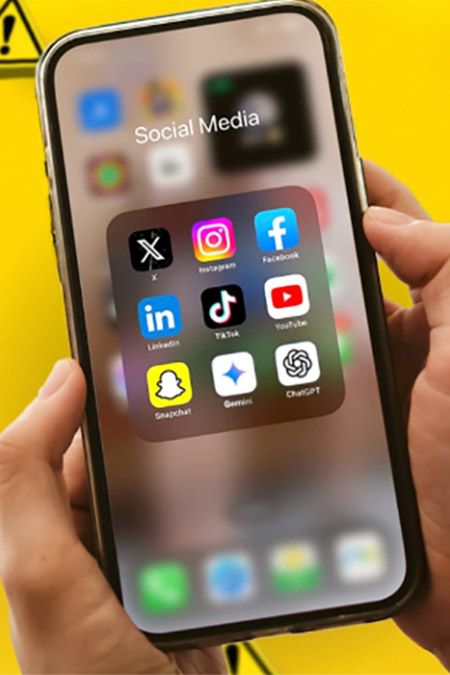
A Los Angeles jury has handed down an unprecedented win for a young woman who sued Meta and YouTube over her childhood addiction to social media. Jurors found that Meta, which owns Instagram, Facebook and WhatsApp, and Google, owner of YouTube, intentionally built addictive social media platforms that harmed the 20-year old's mental health.
Read More
A day of retail therapy can be just the ticket for some people to help them feel better about themselves. But what happens when you can't stop shopping? Surrounded by racks of shirts, dresses and jumpers, Lucy tells me that she could spend up to 14 hours a day searching out new clothes as an escape from reality.
Read More
Internet Use Disorders (IUDs) are emerging as a societal challenge. Evidence-based treatment options are scarce. Digital health interventions may be promising to deliver psychological treatment to individuals with IUDs directly in their online setting. The aim of this study was to evaluate the efficacy of a digital health intervention for IUDs compared to a waitlist control group (WCG).
Read MoreWe greatly appreciate your feedback on this website and would like to know what information you found useful and what services you would like to see next. Please take a couple of minutes to let us know.
survey


